
Leaking Windows in the UK: How to Identify Problems and Find the Right Solution
A leaking window is a common issue faced by many homeowners across the UK, particularly during periods of heavy rainfall, strong winds and changing weather conditions. While a small amount of water ingress may seem like a minor problem, ignoring it can lead to more serious issues such as damp, mould growth, damaged plasterwork and reduced energy efficiency.
The good news is that most window leaks can be effectively managed with the right approach. By identifying the cause, taking immediate action and arranging professional repairs when needed, you can protect your home and prevent further damage.
This guide explains the common causes of leaking windows, what you can do in the short term and how to prevent future problems.
Understanding Why Your Window Is Leaking
Before fixing a leaking window, it is important to determine where the water is entering. The visible signs of a leak are not always directly next to the source, as water can travel along frames, walls and internal surfaces before appearing.
Look out for these common warning signs:
- Water marks or damp patches around the window frame
- Peeling paint or damaged wallpaper near the window
- Mould or mildew around the edges of the window
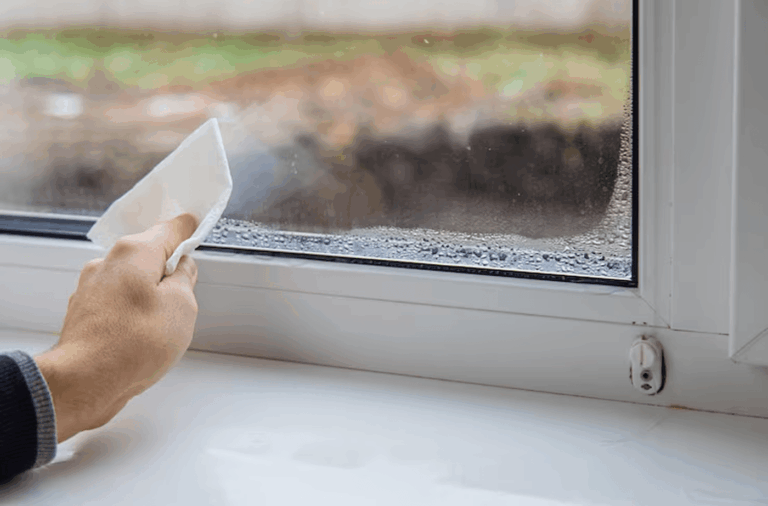
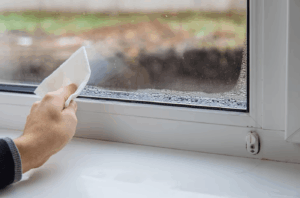
- Excess condensation or moisture build-up
- Cold draughts coming through gaps in the frame
- Water collecting on the window sill after rainfall
Common Causes of Leaking Windows
Worn or Damaged Window Seals
Window seals are designed to prevent water and air from entering your home. Over time, exposure to rain, sunlight and temperature changes can cause seals to crack, shrink or deteriorate, allowing moisture to enter.
Cracked Glass or Failed Double Glazing Units
Damaged glass or failed double-glazed units can affect the window’s ability to keep your home protected from the elements. If condensation appears between the panes of glass, the sealed unit may need replacing.
Incorrect Installation
Poorly fitted windows can leave small gaps around the frame, creating weak points where rainwater can enter. Professional installation is essential to ensure windows remain secure and weather-resistant.
Blocked Window Drainage Channels
Modern windows are designed with drainage holes that allow rainwater to escape safely. If these channels become blocked with dirt, leaves or debris, water can build up inside the frame and eventually leak indoors.
Problems Around the Window Area
In some cases, the source of the water may not be the window itself. Issues with roofing, guttering, external walls or flashing can allow water to travel and appear as though the window is leaking.
Immediate Steps to Reduce Damage
If you discover a leaking window, there are a few temporary measures you can take while arranging a permanent repair.
Cover Gaps and Cracks
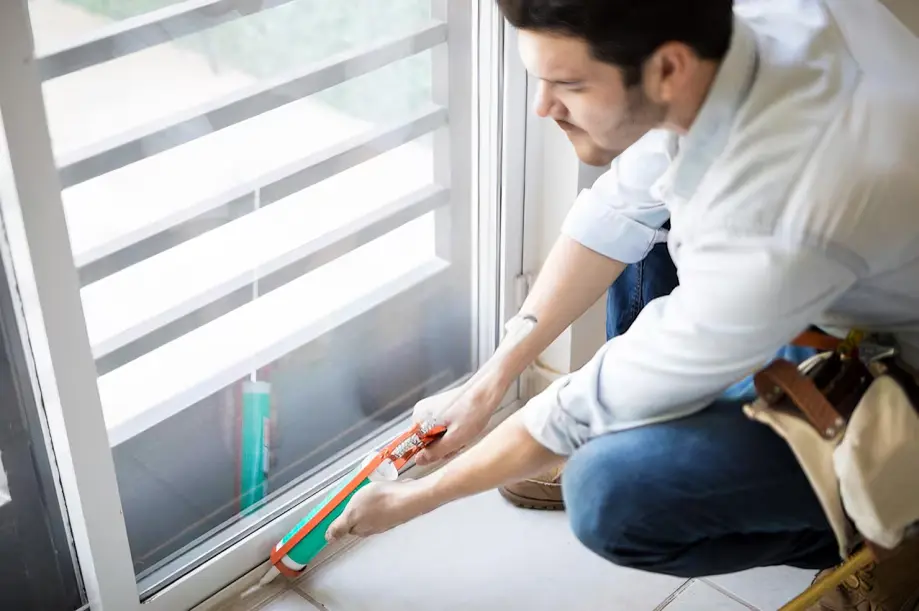
Use waterproof tape or a temporary weatherproof sealant to cover visible gaps around the window frame. This can help reduce water entry until a professional repair is completed.
Protect Your Home Interior
Place towels, containers or protective sheets beneath the affected area to collect water and prevent damage to flooring, furniture and decorations.
Dry the Affected Area
Remove excess moisture as quickly as possible and improve ventilation to reduce the risk of damp and mould developing.
These temporary solutions can help control the problem, but they should only be considered short-term fixes. A professional inspection is the best way to identify and resolve the underlying cause.
Professional Window Repairs: The Best Long-Term Solution
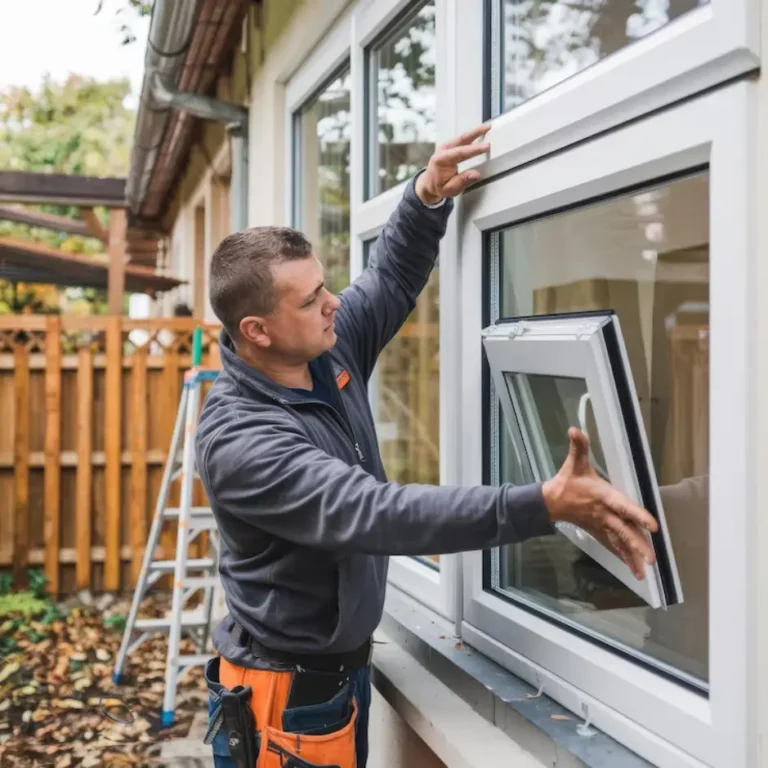
For a reliable and lasting repair, it is recommended to contact an experienced glazing professional. A qualified glazier can inspect your windows, identify the cause of the leak and recommend the most suitable solution.
Depending on the issue, repairs may include:
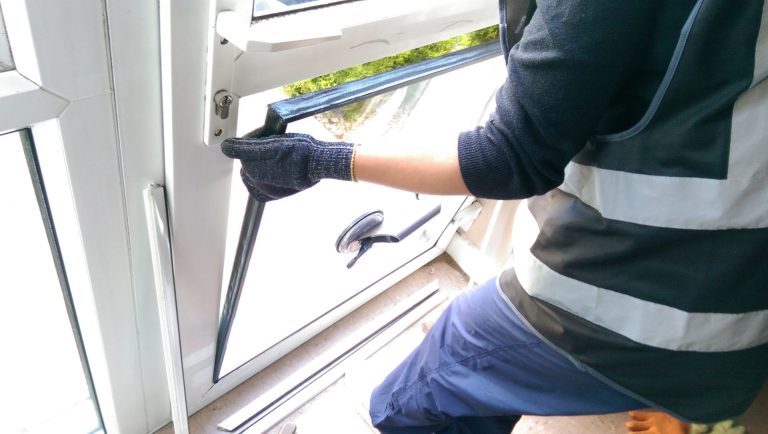
- Replacing damaged seals
- Repairing or replacing window units
- Adjusting window frames
- Re-sealing areas around the window
- Replacing old or damaged windows
Professional repairs can help improve your home’s:
- Weather protection
- Energy efficiency
- Security
- Comfort
- Overall appearance
If the leak is caused by issues with the roof, gutters or external structure of your property, a roofing specialist may also be required to resolve the problem completely.
How to Prevent Future Window Leaks
Regular maintenance can significantly reduce the risk of future leaks and extend the lifespan of your windows.
Inspect Seals and Frames Regularly
Check your window seals and frames for signs of cracking, damage or deterioration. Early repairs can prevent more expensive problems later.
Keep Gutters and Downpipes Clear
Blocked gutters can cause rainwater to overflow and collect around windows and walls. Regular gutter maintenance helps direct water safely away from your home.
Clean Window Drainage Openings
Remove dirt and debris from window tracks and drainage holes to ensure water can flow away properly.
Consider Upgrading Older Windows
Older windows may become less effective over time, leading to increased draughts, heat loss and water ingress. Replacing outdated windows with modern energy-efficient alternatives can improve comfort and reduce maintenance requirements.
Keep Your Home Protected from Water Damage
A leaking window is a problem that should be addressed as soon as possible. Whether the cause is a damaged seal, faulty installation, blocked drainage or another issue, early action can prevent further damage and costly repairs.
By carrying out regular maintenance and seeking professional assistance when required, homeowners across the UK can keep their windows secure, efficient and ready to withstand changing weather conditions throughout the year.